
Service
Wall Insulation
Insulation installed in wall cavities where they are open or accessible.
Overview
What this service covers
Wall insulation is installed in wall cavities where they are open or accessible. That condition is the important part: this is work carried out during a remodel, an addition, or any project where the framing is exposed, rather than a retrofit into finished walls.
When it may be recommended
Wall insulation may be recommended whenever wall cavities are open and going to be closed up, since that is when it can be installed properly. Whether it applies to your project depends on what is actually open — an on-site assessment confirms the appropriate scope.
What it addresses
Conditions this work is meant for
They are not a diagnosis of your home.
A remodel or addition with framing exposed
While the cavities are open, insulating them is straightforward. Once drywall goes up, the opportunity closes.
Uninsulated cavities found during other work
Older construction sometimes has cavities that were never insulated, which becomes visible only when a wall is opened.
Rooms on an exposed elevation
A room with a large wall facing weather or afternoon sun behaves differently from an interior one, though the ceiling plane above it usually matters more.
The Process
How the work is carried out
The order matters more than the brand on the bag. Steps can change once we see the space.
Check what is open and what is in the cavity
We look at which cavities are accessible and at the wiring, plumbing and blocking running through them, since those decide how the material has to be fitted.
Measure the cavity depth and spacing
Material is selected for the actual framing depth and stud spacing rather than trimmed to fit after the fact.
Fit the material to the cavity
Batt is cut to length and fitted so it fills the cavity corner to corner, without gaps at the top and bottom plates where the fit is easiest to get wrong.
Work around obstructions
Material is split around wiring and pipes rather than compressed behind them, so the cavity stays filled and nothing is crushed against the framing.
Check before it is closed in
The run is reviewed while it is still visible, because this is the last point at which anything can be corrected without opening the wall again.
Details
Where it applies
- Condition
- Open or accessible wall cavities. This is not a retrofit into finished walls.
- Material
- Batt sized to the framing depth and stud spacing.
- Fit
- Filled corner to corner, split around wiring and plumbing rather than compressed behind it.
- Timing
- Carried out before the cavities are closed in, during a remodel or addition.
- Also applies to
- Open ceiling framing on the same project, where it is part of the scope.
Our Work
Wall Insulation jobs we have photographed
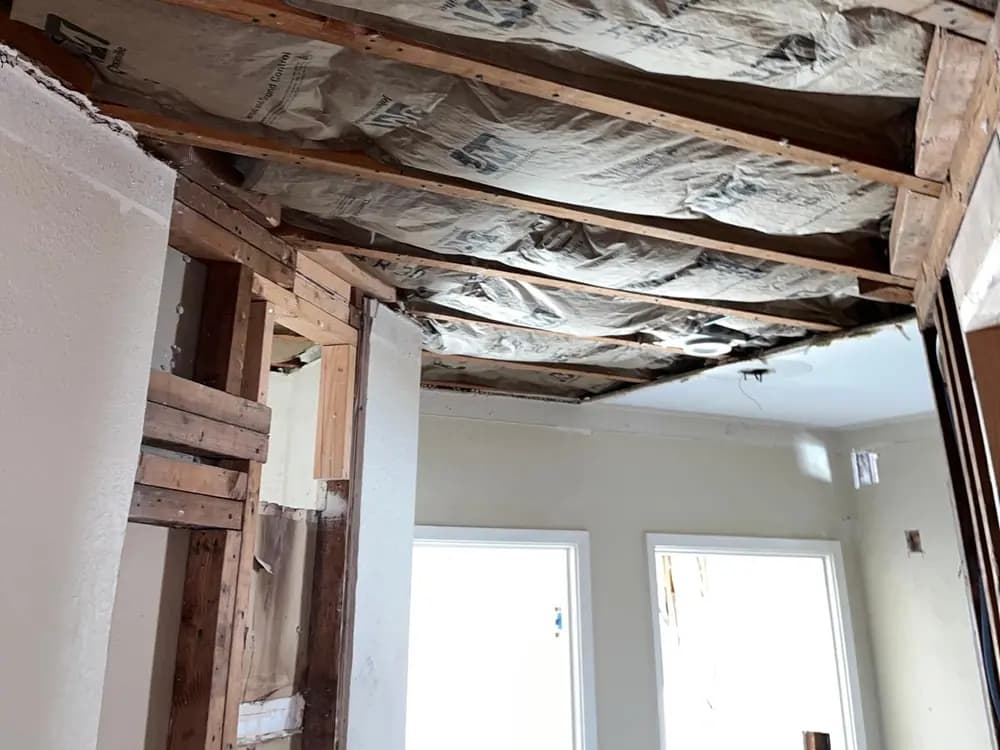
Photographs from EB Insulation jobs filed under this service, including the conditions found before the work started.
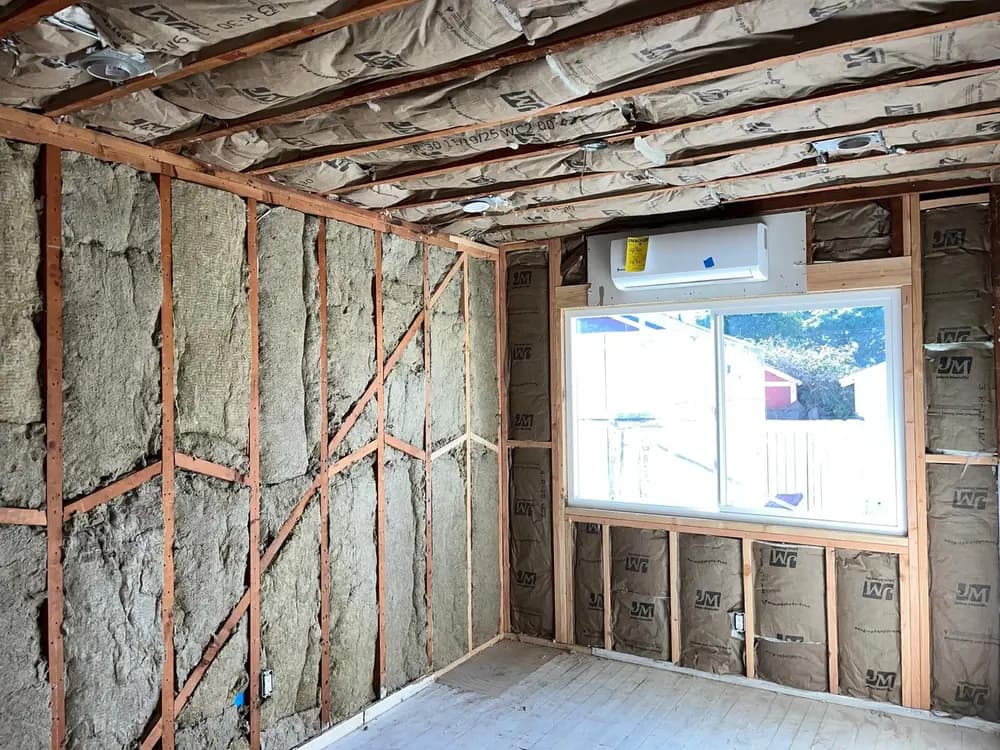
Walls and ceiling insulated before the finish work
Related
Services that often go with this one
Questions
About wall insulation
General guidance. It does not replace an assessment of the actual space.
Can you insulate walls that are already finished?
This service covers cavities that are open or accessible. Retrofitting into closed, finished walls is a different kind of work with different equipment, and it is not something we offer as part of this service.
Are walls or the attic more important?
For most homes the ceiling plane between the attic and the living space is where the largest opportunity sits, because warm air rises and the attic is where the biggest unsealed openings tend to be. Wall cavities are worth insulating when they are already open, which is a question of timing rather than priority.
When should it be scheduled?
After the wiring and plumbing in the wall are complete and inspected, and before drywall. That window is usually short, so it is worth planning rather than fitting in at the end.
Request an estimate for wall insulation
We look at the space before recommending a scope, because what is actually there decides what is worth doing.