
Service
Radiant Barrier
Reflective material installed at the roof deck to reduce radiant heat transfer from a sun-heated roof into the attic.
Overview
What this service covers
A radiant barrier is a reflective material fixed at the roof deck, with its foil face toward the attic air space. On a hot day the roof deck is the hottest surface in the assembly, and it radiates that heat down into the attic. The barrier reduces how much of that radiant heat crosses the attic toward the ceiling plane below.
When it may be recommended
A radiant barrier may be recommended for attics with significant sun exposure and enough clear roof-deck area to install it properly, and it is an addition to insulation rather than a replacement for it. Whether it suits your roof depends on the attic's construction, the ventilation design and how accessible the rafters are — an on-site assessment confirms the appropriate scope.
What it addresses
Conditions this work is meant for
They are not a diagnosis of your home.
An attic that stays hot even though it is vented
Ventilation moves air. It does not do much about heat radiating off a sun-heated roof deck, which is why a well-vented attic can still run warm.
Upper-floor rooms that run hot in the afternoon
Rooms under a large, sun-exposed roof section often peak hours after the outside temperature does, as heat works its way down through the attic.
Ductwork routed through the attic
Air handling equipment and ducts sitting in a hot attic are working against their surroundings the whole time they run.
The Process
How the work is carried out
The order matters more than the brand on the bag. Steps can change once we see the space.
Check the roof structure and access
We look at the rafter layout, the clearances, and whether the underside of the roof deck can be reached across enough of its area for the installation to be worth doing.
Confirm the ceiling plane below is handled
A radiant barrier addresses radiant heat crossing the attic. It does not seal air leaks or replace insulation, so we look at what is happening at the attic floor before recommending it.
Install at the roof line
The material is fastened to the underside of the rafters or roof deck, running with the roof plane, and secured at the edges so it stays fitted.
Keep the reflective face toward the air space
A radiant barrier only works facing an air gap. It is installed with the foil face toward the attic and inset so the gap stays open, not sandwiched against another material.
Work around ventilation and fixtures
Ridge and eave ventilation paths are kept clear, and the material is cut around anything that needs to stay accessible.
Details
How it is installed
- Location
- The underside of the roof deck or rafters, running with the roof plane.
- Orientation
- Reflective face toward the attic air space, with the air gap left open.
- Fixing
- Fastened to the framing and secured along the edges.
- What it does not do
- It does not seal air leakage, does not replace attic floor insulation, and does not carry an R-value in the way insulation does.
- Depends on
- Roof and rafter construction, sun exposure, attic ventilation design, and how much of the deck can be reached.
Our Work
Radiant Barrier jobs we have photographed
Photographs from EB Insulation jobs filed under this service, including the conditions found before the work started.
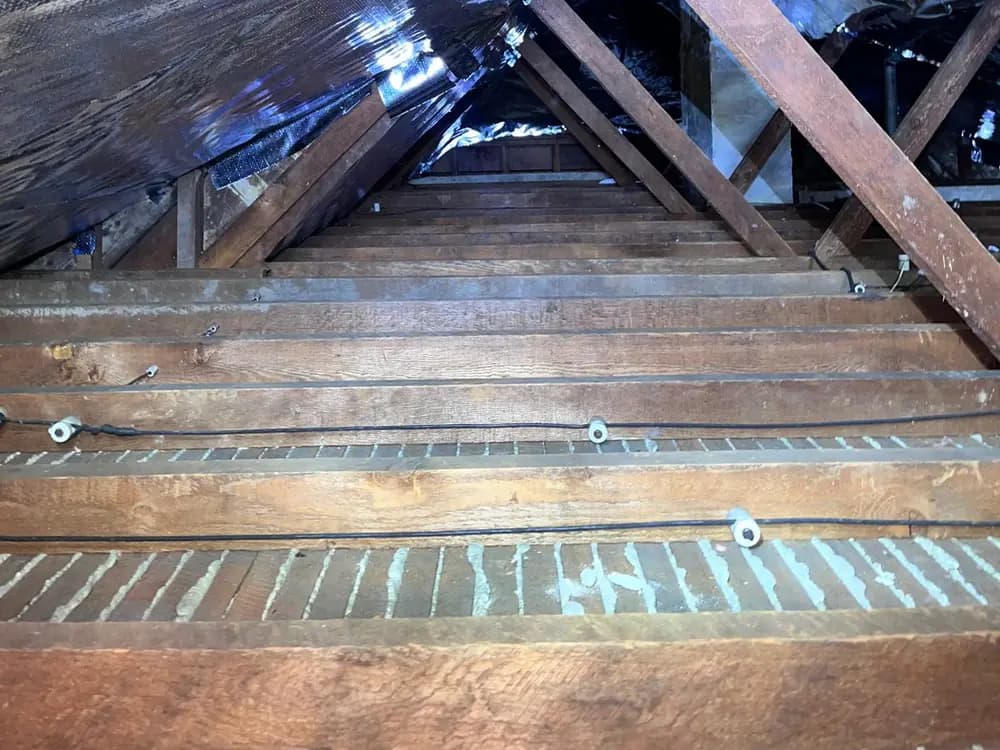
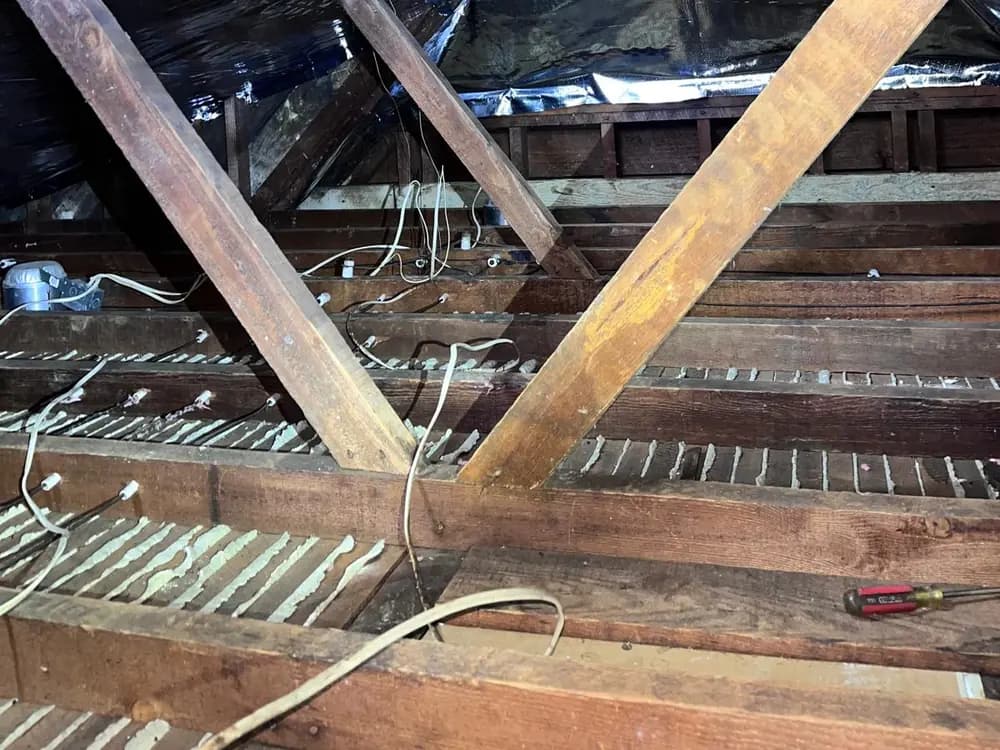
Radiant barrier installation in progress above a sealed ceiling
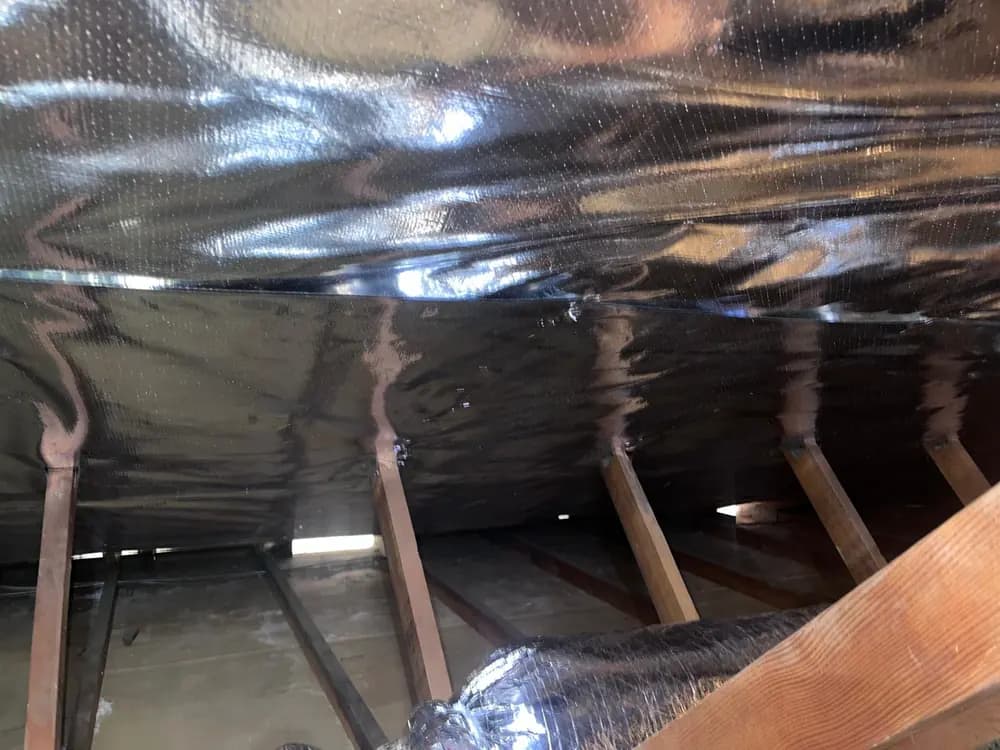
Roof deck covered, foil facing the attic air space
Related
Services that often go with this one
- Attic InsulationInsulation installed across the attic floor so the ceiling plane between the attic and the living space performs as it should.
- Air SealingSealing the gaps, joints and penetrations that let conditioned air escape into the attic before new insulation goes in.
- Attic FanPowered ventilation that moves hot air out of the attic, specified for attics where it suits the roof and ventilation design.
Questions
About radiant barrier
General guidance. It does not replace an assessment of the actual space.
Can a radiant barrier replace attic insulation?
No. They address different kinds of heat transfer. Insulation resists conducted heat through the ceiling plane; a radiant barrier reduces radiant heat crossing the attic from a sun-heated roof. A barrier installed over a poorly insulated, unsealed ceiling plane is working against a problem it was never designed to solve.
Does it do anything in cold weather?
Its main effect is on radiant heat from a sun-heated roof, which is a warm-weather condition. In cold weather the work that matters at the ceiling plane is insulation and air sealing, because that is where heat is leaving the house.
Does it stop working if it gets dusty?
A reflective surface depends on staying reflective, which is one reason it is installed at the roof line facing an air space rather than lying flat on the attic floor where dust settles on it.
Request an estimate for radiant barrier
We look at the space before recommending a scope, because what is actually there decides what is worth doing.