
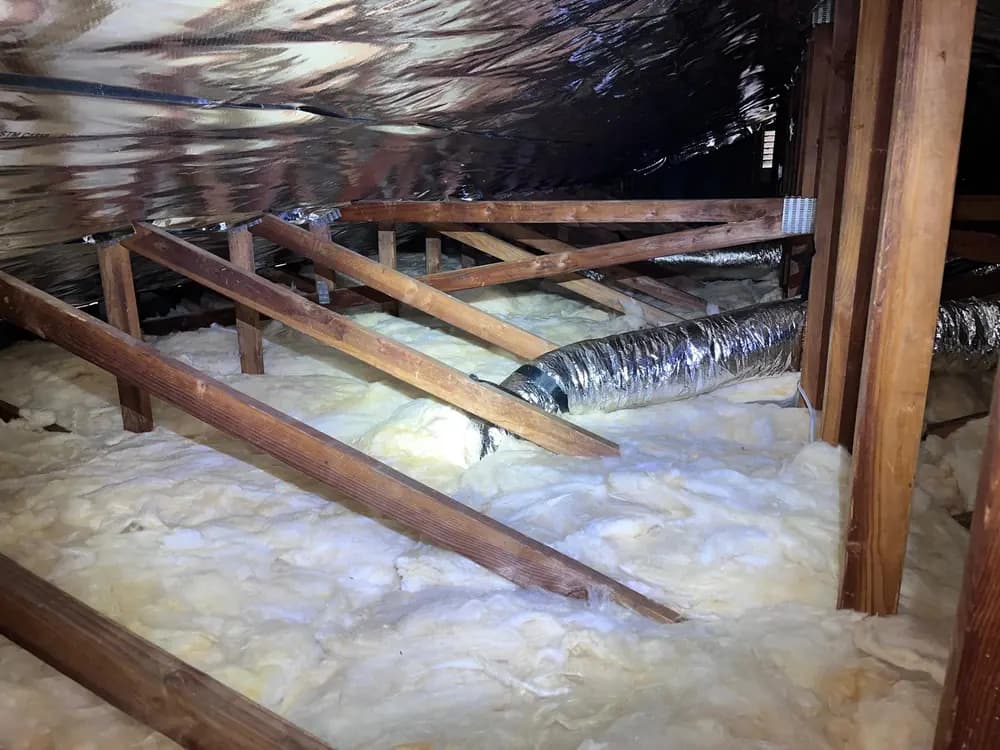
Service
Attic Insulation
Insulation installed across the attic floor so the ceiling plane between the attic and the living space performs as it should.
Overview
What this service covers
Attic insulation is installed across the attic floor so the ceiling plane between the attic and your living space does what it is supposed to do: slow the movement of heat in both directions. Insulation does not create warmth or coolness. It slows how quickly the temperature you are paying for leaves the rooms below.
When it may be recommended
New attic insulation may be recommended where the existing material is thin, displaced, damp or contaminated, and it is normally carried out together with air sealing rather than on its own. The right depth depends on your climate zone and how the attic is built, so an on-site assessment confirms the appropriate scope rather than a figure read online.
What it addresses
Conditions this work is meant for
They are not a diagnosis of your home.
Joists visible across the attic floor
If the tops of the ceiling joists stand clear of the insulation across the attic, there is usually room to improve the depth.
Material that has been displaced or compressed
Insulation that has been walked on, pushed aside for storage, or tunnelled through performs well below what it was rated for, regardless of how much of it is there.
Contamination from rodents or moisture
Droppings, nesting material and damp all change what the material is doing. This is one of the more common conditions we find on the attic floor.
Rooms directly under the attic that never settle
A top-floor room that runs hot in summer and cold in winter often points at the ceiling plane above it, though it is not the only possible cause.
The Process
How the work is carried out
The order matters more than the brand on the bag. Steps can change once we see the space.
Assess what is already there
We look at the type, depth and condition of the existing material, and at whether the attic has anything else that needs attention first — active leaks, rodent entry points, or ductwork problems.
Remove what is no longer performing
Material that is contaminated, damp or badly compressed is taken out and bagged, so the new layer sits on a clean ceiling plane rather than on top of a problem.
Air seal the ceiling plane
With the floor clear, the penetrations and framing joints are sealed. This is the point in the job where sealing is genuinely accessible, which is why the two services are usually scheduled together.
Install the new material
Batt or loose-fill is installed as an even, continuous layer across the attic floor, fitted around framing rather than compressed into it. Compressed insulation does not perform at the level it is rated for.
Keep the required clearances
Insulation is held back from anything that needs air or clearance around it, and eave ventilation paths are kept open so the attic can still breathe.
Clean up the work area
Removed material is taken away and the access area and adjoining space are cleaned.
Details
Materials and conditions
- Location
- The attic floor — the ceiling plane between the attic and the living space.
- Material types
- Batt or loose-fill, chosen for the attic in question. The specific product is confirmed on site rather than assumed in advance.
- Coverage
- An even, continuous layer fitted around framing. Not mounded, not compressed, and not interrupted at the awkward corners.
- Clearances
- Maintained around fixtures, flues and anything else requiring separation, with eave ventilation paths left open.
- Depends on
- Attic height and access, the condition of the existing material, and whether the ceiling plane can be reached across its full area.
Our Work
Attic Insulation jobs we have photographed
Photographs from EB Insulation jobs filed under this service, including the conditions found before the work started.
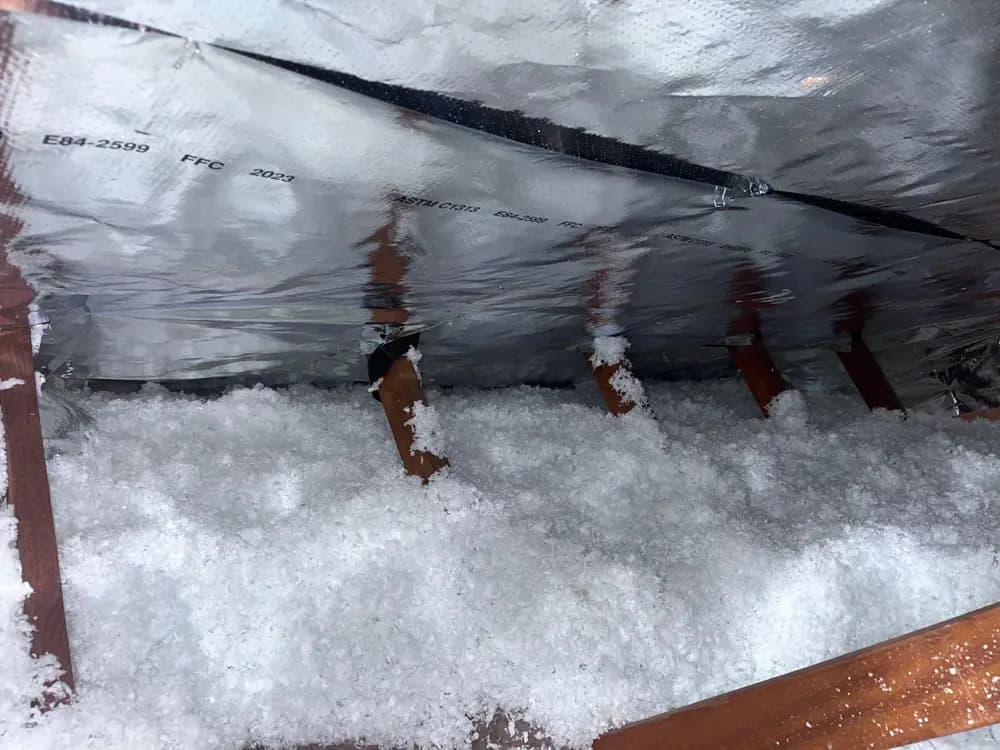
Loose-fill insulation distributed evenly between the joists
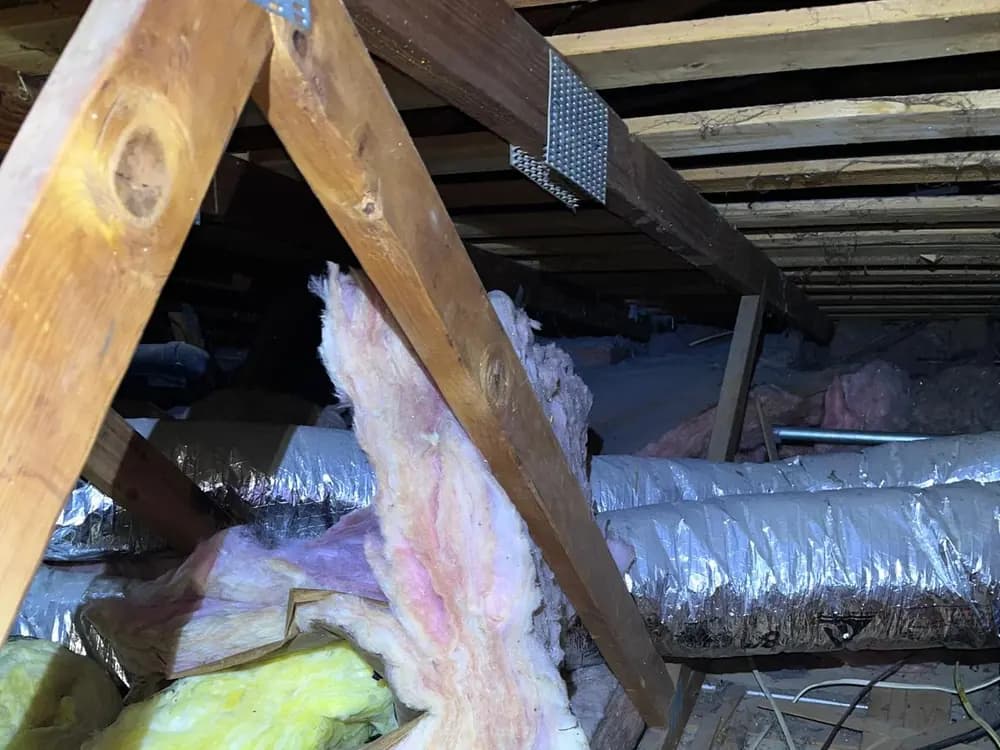
Existing insulation found displaced and contaminated
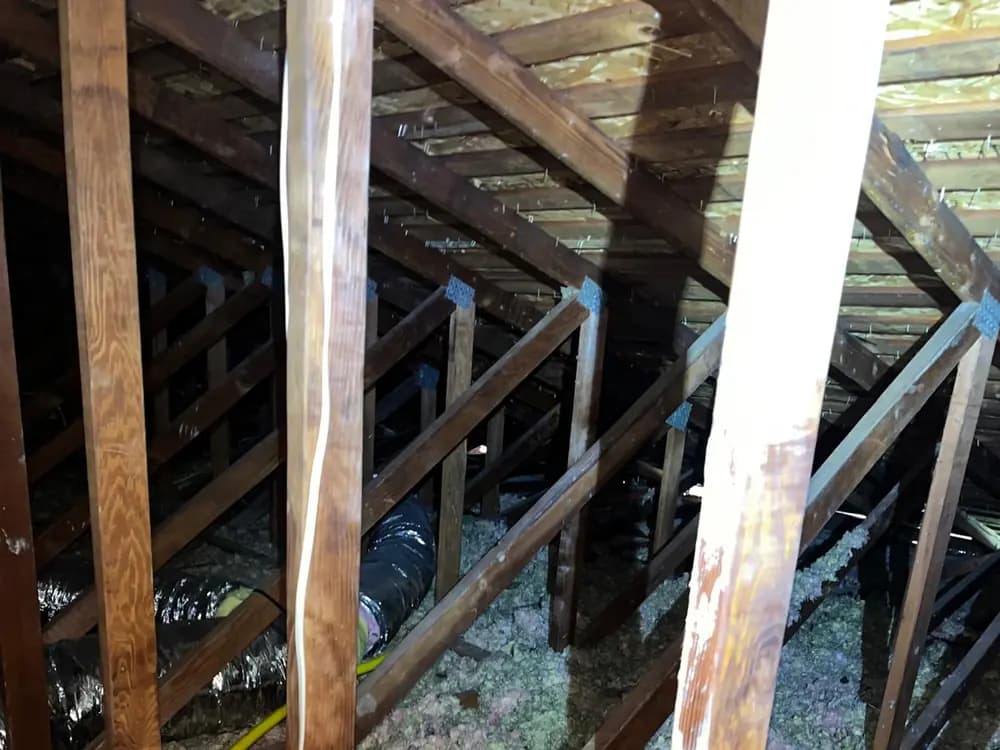
Old material removed ahead of the new installation
Related
Services that often go with this one
- Air SealingSealing the gaps, joints and penetrations that let conditioned air escape into the attic before new insulation goes in.
- Radiant BarrierReflective material installed at the roof deck to reduce radiant heat transfer from a sun-heated roof into the attic.
- Rodent ProofingClosing the entry points rodents use, so the attic and crawl space stay sealed after the work is done.
Questions
About attic insulation
General guidance. It does not replace an assessment of the actual space.
How much insulation should my attic have?
It depends on your climate zone, how the attic is built and the applicable code, so there is no single number that fits every home. A practical first check is whether the material sits below the top of the ceiling joists. Condition matters as much as depth: insulation that is compressed, displaced, damp or contaminated performs well below what it was rated for.
Can new insulation go over the old material?
Sometimes, when the existing layer is dry, clean and undisturbed. When it is contaminated, damp or heavily compressed, adding over it locks the problem in place and covers the penetrations that still need sealing. Which route makes sense is decided after looking at the attic.
Do you remove the old insulation?
When the condition calls for it, yes — removal is part of this service where it is needed. We do not offer insulation removal as a standalone service disconnected from the work that follows it.
Is this the same as a radiant barrier?
No. Attic insulation resists conducted heat moving through the ceiling plane and is installed on the attic floor. A radiant barrier is a reflective surface installed at the roof deck facing an air space, and it addresses radiant heat instead. They do different jobs, and one is not a substitute for the other.
Request an estimate for attic insulation
We look at the space before recommending a scope, because what is actually there decides what is worth doing.