
Service
Moisture Barrier / Crawl Space Insulation
Ground vapor barrier and crawl-space insulation that address damp soil and the odors and cold floors that follow.
Overview
What this service covers
A ground vapor barrier separates damp soil from the air under your house, and crawl-space insulation addresses the floor above it. Exposed soil in a crawl space puts moisture into the air continuously, and that air does not stay under the house — it moves upward into the rooms above, bringing odors and cold floors with it.
When it may be recommended
A ground barrier may be recommended where the crawl space has exposed soil and you are noticing damp air, odors or persistently cold floors. If there is standing water or a drainage problem, that needs to be resolved first — a barrier is not a substitute for fixing water intrusion, and an on-site assessment confirms the appropriate scope.
What it addresses
Conditions this work is meant for
They are not a diagnosis of your home.
Exposed soil under the house
Bare ground in a crawl space releases moisture into the air below the floor for as long as it stays uncovered.
Musty odors reaching the living space
Air from the crawl space finds its way up through floor penetrations. What it smells like under the house is often what it smells like in the hallway.
Floors that stay cold
An uninsulated floor over a cold, damp crawl space stays cold underfoot regardless of how well the rest of the house is heated.
Insulation falling out from between the floor joists
Batt insulation that has sagged or dropped is not in contact with the floor above it, and it stops doing much once it loses that contact.
The Process
How the work is carried out
The order matters more than the brand on the bag. Steps can change once we see the space.
Inspect the crawl space
We look at the ground condition, standing water or evidence of it, the state of any existing barrier and insulation, the vents, and whether there are signs of rodent activity.
Identify anything that has to be resolved first
Active water intrusion, drainage problems and plumbing leaks are not solved by a barrier. Where we find them, we say so rather than covering them.
Clear and prepare the ground
Debris and any failed material are removed so the barrier can lie flat against the soil rather than bridging over obstructions.
Lay the ground vapor barrier
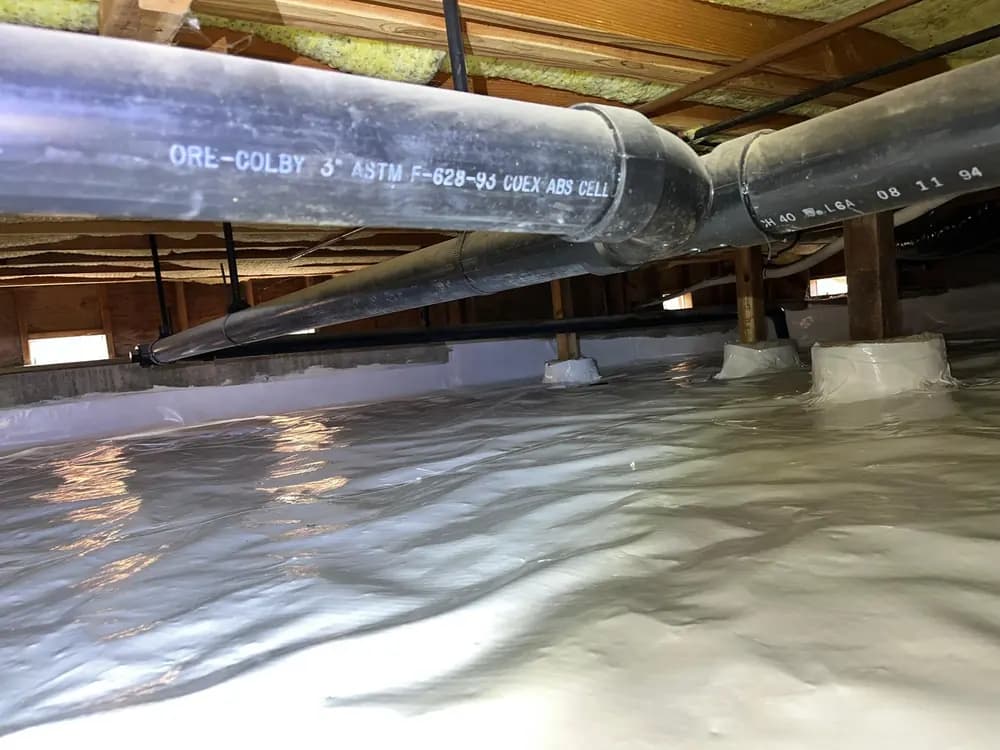
Sheeting is run across the soil as a continuous layer, overlapped at the seams and fitted around the pier footings and perimeter so the coverage is not interrupted.
Insulate between the floor joists
Where it is part of the scope, insulation is fitted between the floor joists overhead and supported so it stays in contact with the subfloor instead of sagging away from it.
Clean up and remove waste
Old material and debris are bagged and taken away.
Details
Materials and coverage
- Ground barrier
- Continuous sheeting laid across the soil, overlapped at the seams.
- Perimeter
- Fitted around pier footings and run to the perimeter so coverage stays unbroken.
- Floor insulation
- Batt fitted between the floor joists and supported against the subfloor.
- Prerequisite
- No standing water and no unresolved drainage or plumbing leak. Those are addressed before a barrier goes down.
- Depends on
- Crawl-space height and access, ground condition, and the state of the existing floor framing.
Our Work
Moisture Barrier / Crawl Space Insulation jobs we have photographed
Photographs from EB Insulation jobs filed under this service, including the conditions found before the work started.
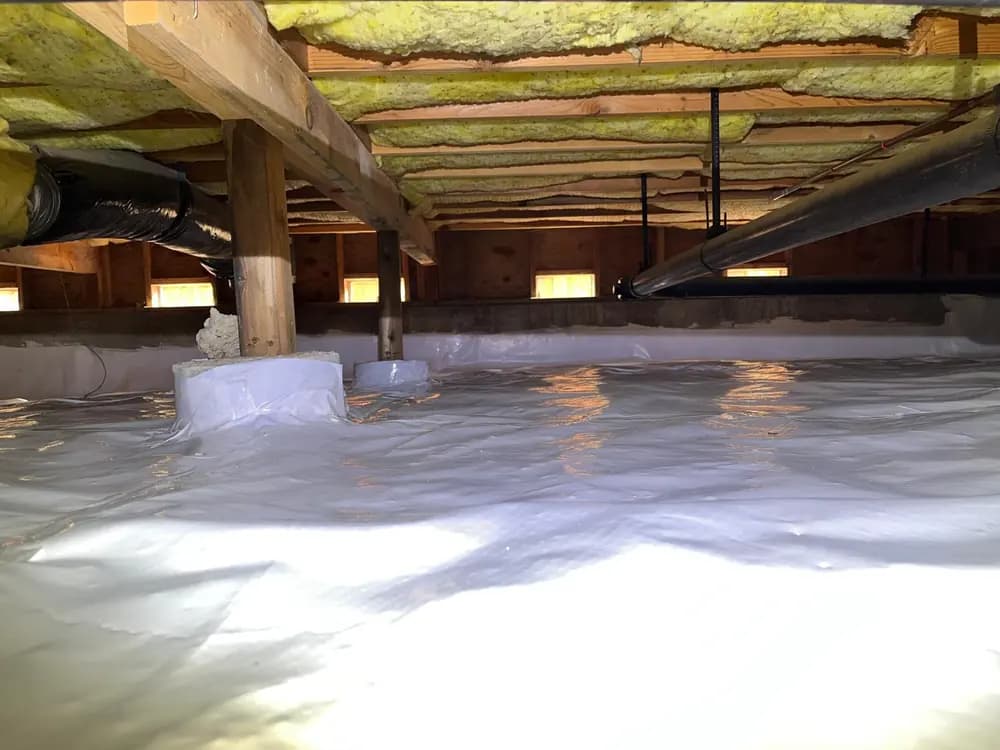
Ground barrier below, insulation between the floor joists above
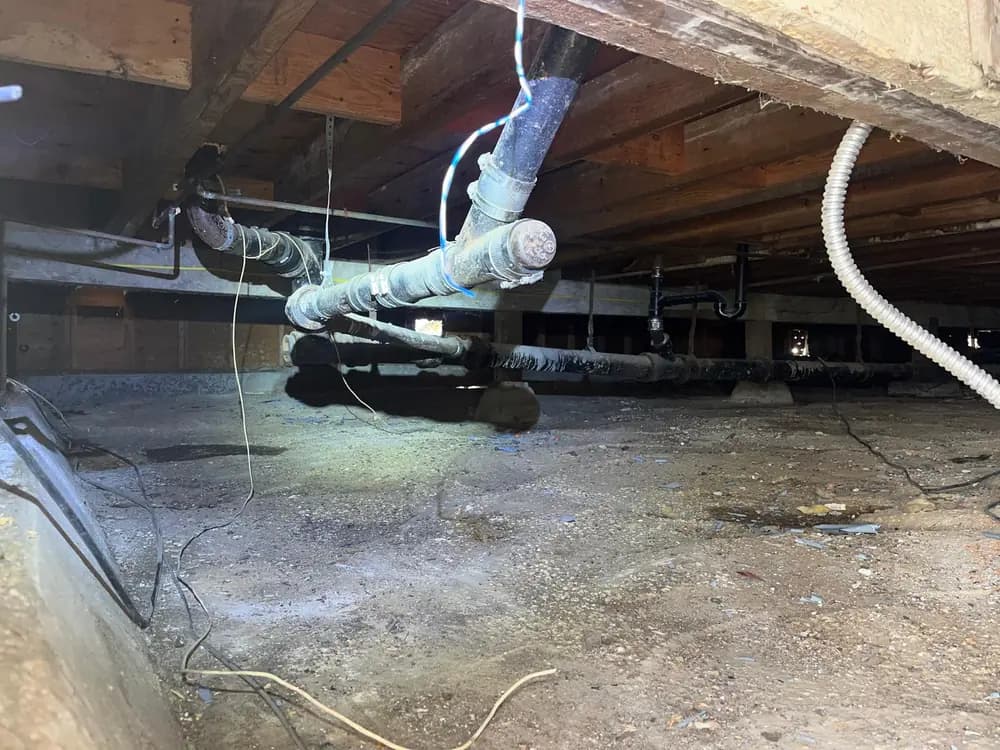
Exposed soil in a crawl space before treatment
Questions
About moisture barrier / crawl space insulation
General guidance. It does not replace an assessment of the actual space.
When might a crawl-space moisture barrier be recommended?
Typically when the crawl space has exposed soil and you are noticing damp air, musty odors reaching the living space, or persistently cold floors. A ground vapor barrier separates the soil from the air under the house. If there is standing water or a drainage problem, that needs to be addressed first.
What if there is water under the house?
Then the water comes first. A vapor barrier manages moisture rising out of damp soil; it does not stop water entering the crawl space. Laying one over an active intrusion hides the problem rather than treating it, and we will say so rather than proceed.
Do the foundation vents stay open?
Vent treatment depends on how the crawl space is built and what is happening in it, and it is decided on site rather than by a general rule. Where rodent entry is a concern, screening the vents falls under rodent proofing.
Request an estimate for moisture barrier / crawl space insulation
We look at the space before recommending a scope, because what is actually there decides what is worth doing.